
Breast Imaging Displays for Enterprise & Remote Reading
Double Black Imaging delivers complete breast imaging solutions for screening, diagnostic interpretation, tomosynthesis review, and remote reading workflows. From high-performance breast imaging displays to enterprise calibration management and ergonomic reading environments, DBI helps imaging teams standardize performance, simplify compliance, and support radiologists wherever they read.
- FDA-Cleared 5MP & 12MP Breast Imaging Displays
- MQSA Reporting & QA Wizards Included
- Remote Reading & Telemammography Expertise
- Enterprise Calibration Management with CFS Calibration Suite®
- 5-Year Warranty with USA-Based Support
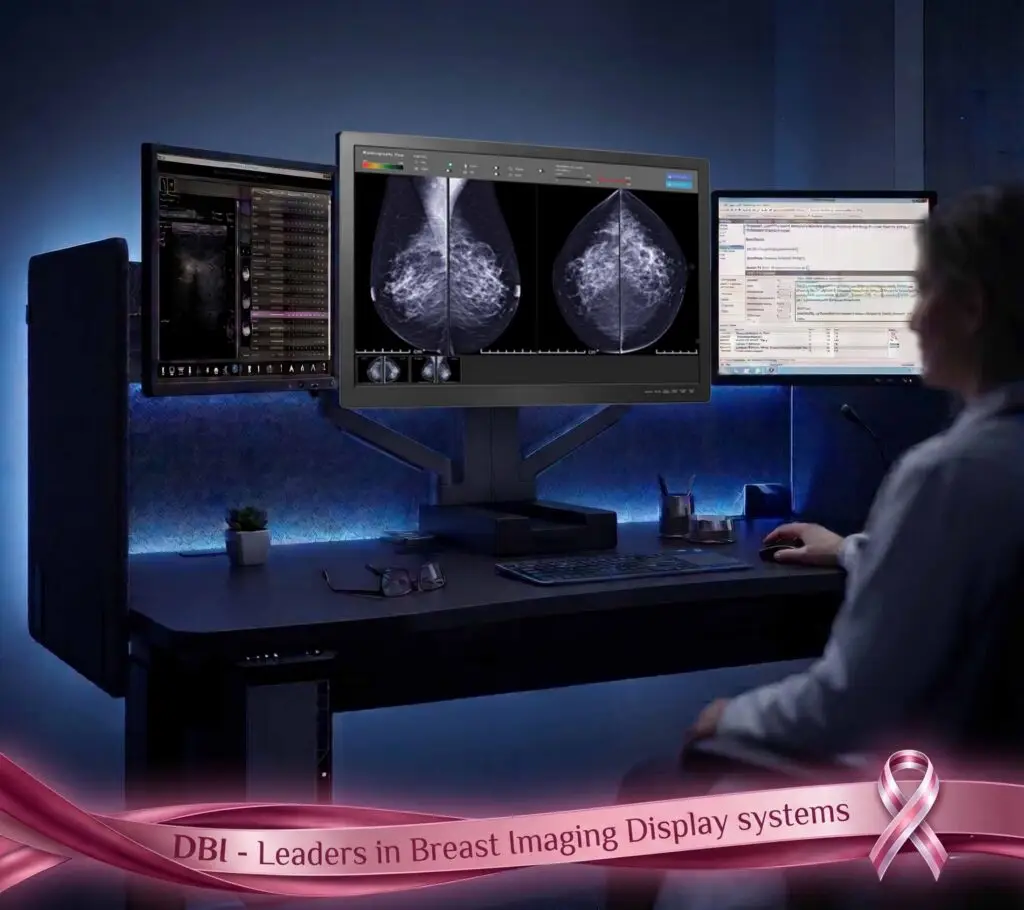
Designed for Modern Breast Imaging Workflows
FDA Cleared Displays
Designed for mammography and
breast tomosynthesis.
MQSA Workflow Tools
Integrated reporting and QA Wizards simplify compliance workflows.
Remote Reading Expertise
Supporting enterprise telemammography and high-performance remote breast imaging environments.
USA-Based Service & Support
Diagnostic display integration, calibration management, and industry-leading support from DBI’s USA-based team.
Breast Imaging Displays
FDA-cleared 5MP and 12MP breast imaging displays designed for mammography, tomosynthesis, and enterprise remote reading workflows.
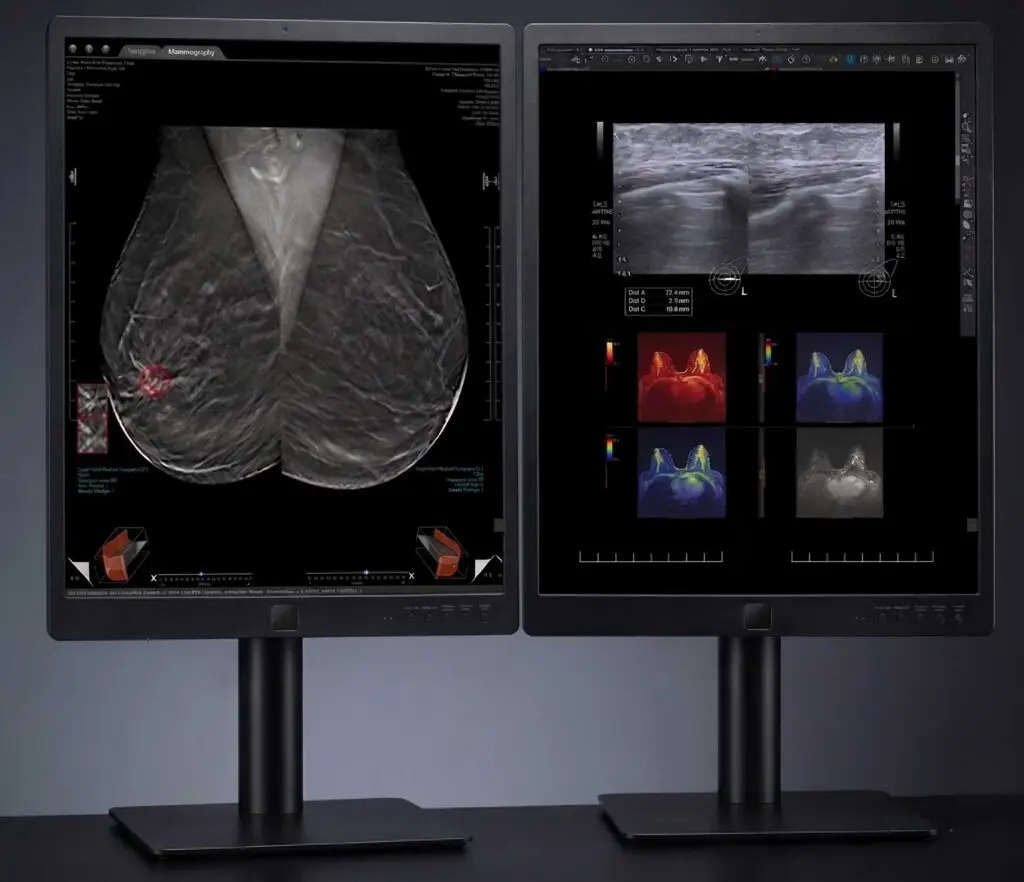
5MP Color Breast Imaging Display
DBI 5MP breast imaging displays deliver the luminance, grayscale consistency, and image detail required for digital mammography interpretation. Designed for high-volume screening and diagnostic workflows, these displays provide reliable image presentation with integrated calibration and compliance management capabilities.
Feature Highlights:
- FDA-cleared for breast imaging
- High luminance and grayscale stability
- Auto-DICOM calibration support
- Integrated quality assurance workflows
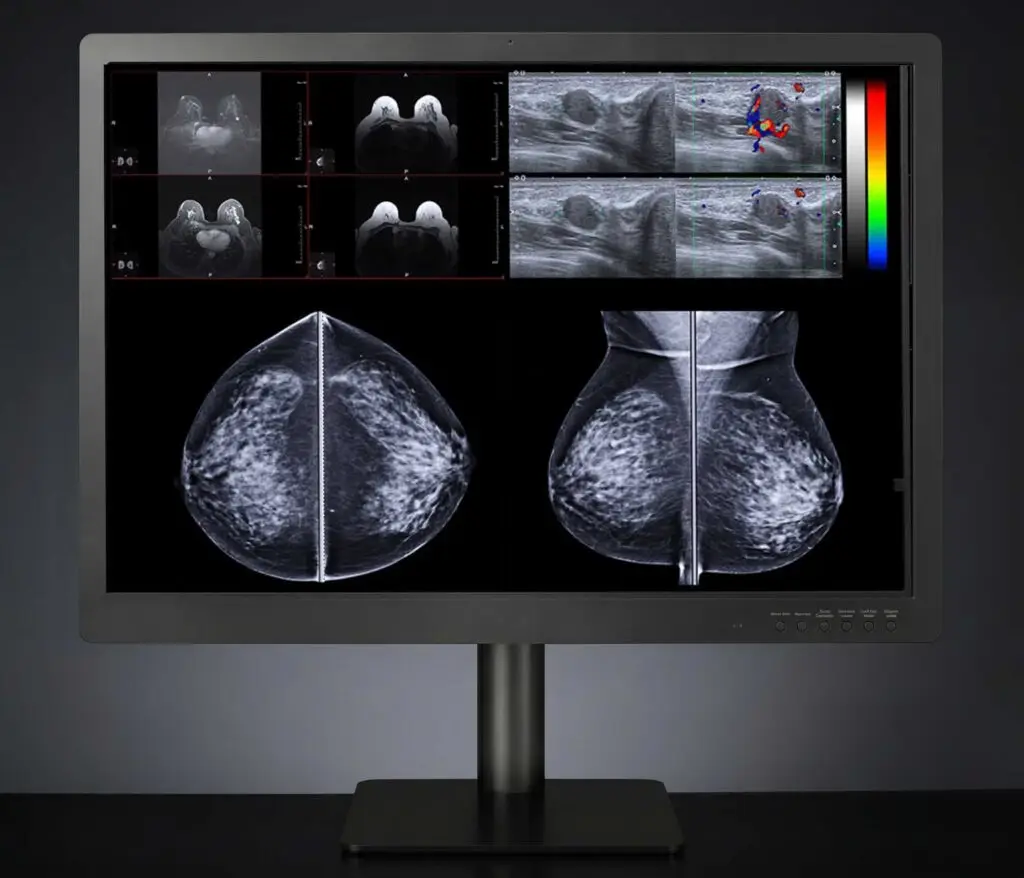
12MP Color Breast Imaging Display
DBI 12MP displays are designed to support advanced breast imaging workflows by enabling radiologists to view multiple imaging studies within a single seamless viewing environment. The expansive display area helps reduce workflow interruptions while improving visualizationacross mammography and multimodality breast imaging studies.
Feature Highlights:
- FDA-cleared breast imaging display
- Seamless large-format diagnostic viewing
- Ideal for breast tomosynthesis workflows
- Enterprise calibration with MQSA Reporting
Engineered for Breast Imaging Performance
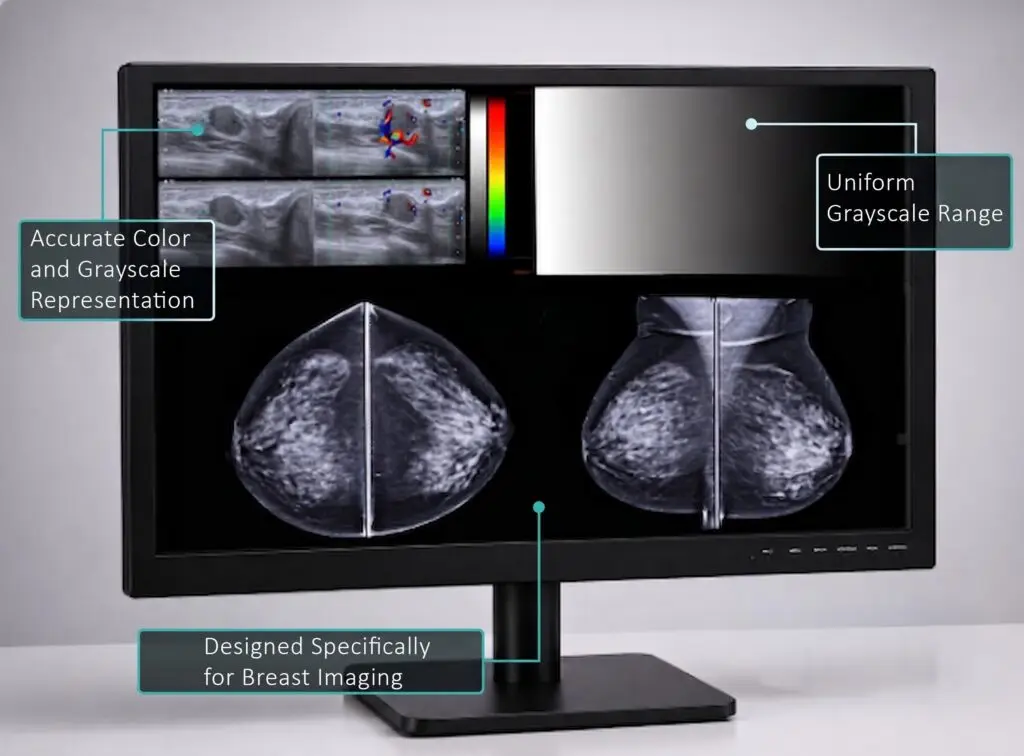
DICOM Calibration Consistency
Supports accurate grayscale rendering for breast imaging interpretation.
High Luminance Stability
Designed for long-term mammography image consistency.
Optimized for Tomosynthesis
Supports detailed visualization across breast imaging workflows.
Long-Term Clinical Reliability
Engineered for continuous diagnostic use in enterprise environments.
MQSA Reporting & Enterprise Management
Reduce On-Site QA Burden
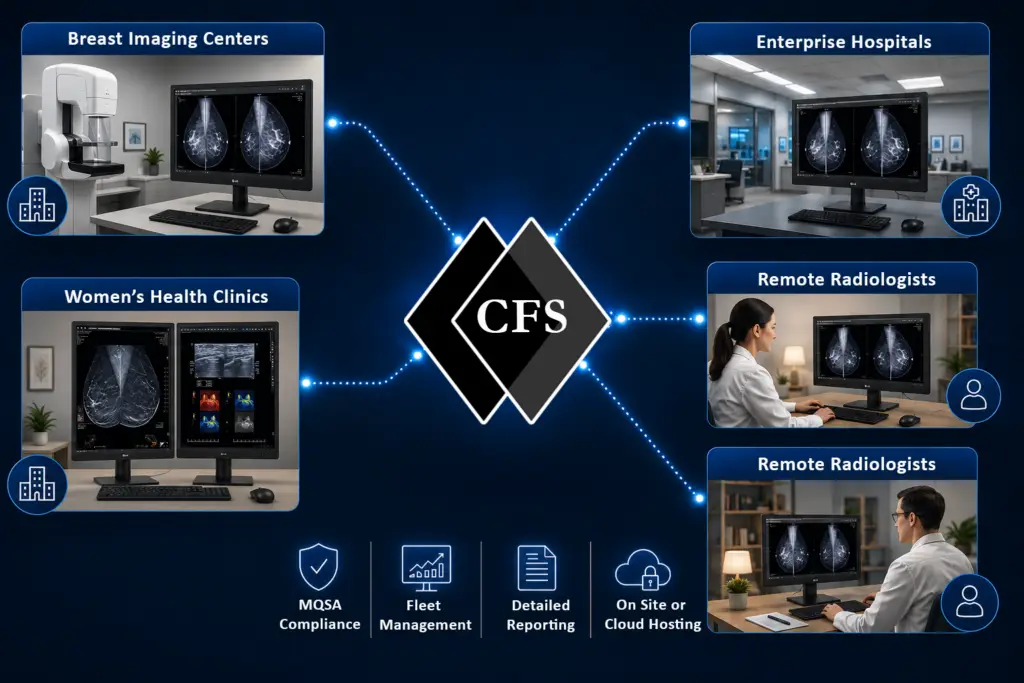
DBI’s remote calibration management tools help organizations streamline annual QA workflows and support distributed reading environments without requiring extensive onsite display management.
Feature Highlights:
- MQSA Reporting Wizards
- Enterprise Calibration Management
- Remote QA Oversight
- Automated DICOM Calibration
- Centralized Compliance Reporting
- Fleet Monitoring and Alerting
- Hosted Locally or Via Cloud
Remote Breast Imaging & Telemammography Solutions
Breast Imaging Beyond the Reading Room
As breast imaging programs continue expanding beyond traditional reading rooms, healthcare organizations need remote reading environments that maintain clinical consistency, workflow efficiency, and centralized quality oversight. DBI helps imaging teams standardize remote breast imaging deployments with FDA-cleared displays, enterprise calibration management, and purpose-built workstation solutions designed for telemammography workflows.
Feature Highlights:
- Replicate the Reading Room Experience at Home
- Consistent Image Interpretation
- Remote QA Management and Compliance Reporting
- Automated DICOM Calibration with CFS Calibration Suite®
- MQSA Wizards Built-In
- Configurations for Enterprise & Independent Reading Environments
- In-Person Annual Physicist Visit Not Required
- Cost Effective Deployments
- 5 Year warranty, Advanced Hot-Swap and Remote Web Support
- Ergonomic workstations and CPU Bundles
Designing Remote Reading Environments for Breast Imaging
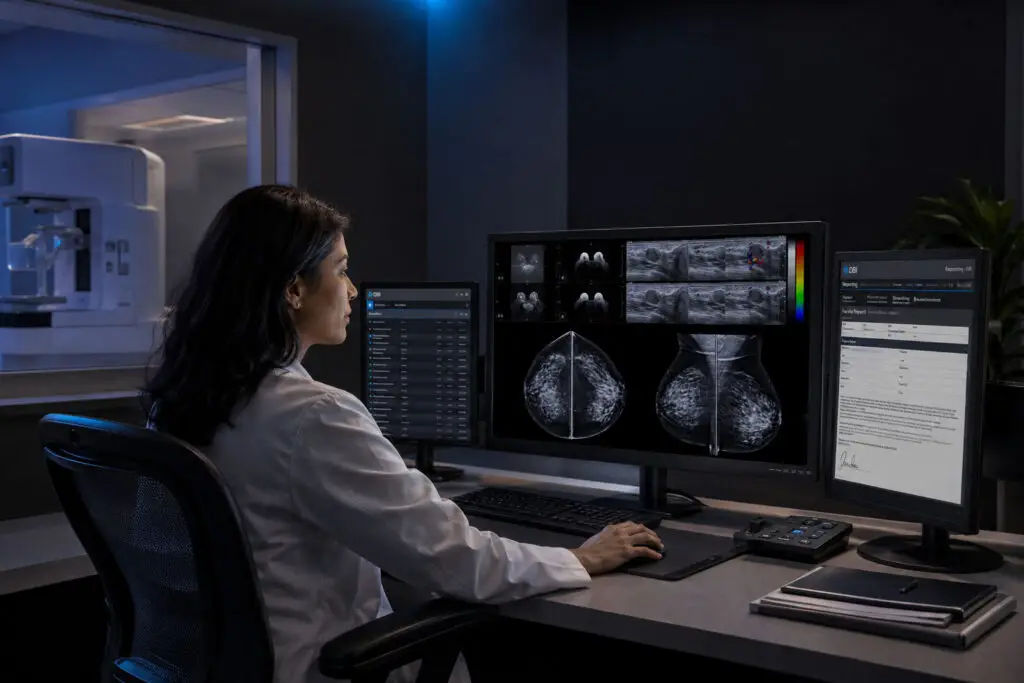
DBI solutions help organizations build remote breast imaging workspaces that support consistent mammography interpretation, ergonomic efficiency, and centralized QA oversight for telemammography workflows.
Why Breast Imaging Teams Choose DBI
Breast Imaging Expertise
Designed specifically for mammography and breast tomosynthesis interpretation workflows.
Enterprise Calibration Management
Centralized calibration, QA oversight, fleet management, asset tracking, and MQSA workflow tools for distributed imaging environments.
Remote Reading Deployment Experience
Supporting consistent breast imaging performance across hospital and remote reading locations with ergonomic workstations and preconfigured CPU bundles.
Industry-Leading Warranty & Support
Responsive USA-based support backed by the industry’s strongest warranty programs while providing the best value.
Breast Imaging FAQs
What type of display is required for primary Breast Imaging reads?
MQSA regulations require that primary mammography reads — including FFDM and digital breast tomosynthesis (DBT) — be performed on a display that is FDA-cleared for mammography interpretation and listed as approved by your specific acquisition system vendor (Hologic, GE, Siemens, Fujifilm, etc.). At minimum, a 5MP grayscale medical display meeting luminance and calibration requirements is needed. DBI offers both 5MP and 12MP FDA-cleared options to fit single-modality and advanced multi-modality workflows.
What is DICOM GSDF Calibration and why does it matter for Breast Imaging?
DICOM GSDF (Grayscale Standard Display Function) is the international standard that defines how a display should render grayscale values so that image appearance is consistent regardless of the monitor used. For breast imaging, where detecting subtle microcalcifications and soft-tissue asymmetries is clinically critical, an uncalibrated or out-of-tolerance display can mask findings or introduce false contrast. DBI displays ship pre-calibrated to GSDF and include automated calibration tools to maintain accuracy over the display's full service life.
Can DBI display solutions support remote and enterprise reading for Breast Imaging?
Yes. DBI's breast imaging display systems are designed for both on-site reading rooms and remote teleradiology environments. Each display is shipped calibrated, and remote calibration verification is supported through DBI's Calibration Feedback System (CFS), allowing enterprise-wide compliance. Radiologists reading from home or satellite sites use the same FDA-cleared, MQSA-compliant hardware as their on-site counterparts.
How does CFS help me with MQSA compliance reporting?
DBI's systems include built-in MQSA compliance reporting tools that generate the documentation needed for physicist QC visits and accreditation reviews. Calibration logs, luminance measurements, and QC pass/fail records are captured automatically and stored in a format acceptable for MQSA reporting — reducing manual documentation burden on your imaging staff and QC physicist
When should I choose a 12MP over a 5MP for Breast Imaging?
A 5MP display meets the minimum MQSA requirement for FFDM and DBT primary reads. A 12MP display is the preferred choice for high-volume programs, academic centers, or practices performing advanced breast imaging interpretation where maximum spatial resolution supports greater reading confidence — particularly in dense breast cases, subtle architectural distortion, and multi-modality correlation workflows.
Do DBI display solutions require an on-site physicist at each annual visit?
CFS Calibration Suite® is designed to support annual physicist QC requirements with centralized remote management — reducing the need for the physicist to be physically present at every reading location in a multi-site or teleradiology program. Fleet-wide calibration data, QC history, and compliance status are accessible from a single dashboard, giving your physicist the documentation they need to complete review remotely in many cases. We recommend confirming specific on-site visit requirements with your accrediting body, as requirements can vary.
What luminance level is required for a primary Breast Imaging display?
The ACR–AAPM Technical Standard requires a minimum maximum luminance of 420 cd/m² for displays used for primary mammography interpretation — higher than the 350 cd/m² minimum required for other diagnostic displays. This elevated threshold reflects the demands of detecting subtle microcalcifications and low-contrast soft tissue structures in dense breast tissue. Luminance must remain within 10% of the calibrated target over the display's service life, which is why automated calibration and periodic physicist QC testing are required rather than relying on a one-time factory measurement.
Our current displays work fine, is there a reason to look at replacing them?
Displays that appear to function can still drift out of GSDF calibration tolerance in ways that aren't visible to the reader but are detectable under QC testing. If your physicist is manually tracking calibration across a fleet, or if displays are approaching 7+ years of use, the compliance and operational risk tends to rise quietly before it becomes a visible problem. The other practical trigger: if you're expanding to remote reading or adding sites, setting up new locations on a managed, remotely verifiable platform from the start is significantly easier than retrofitting a legacy fleet later.
What does a fully configured DBI Breast Imaging workstation include?
A fully configured DBI breast imaging workstation is built around three integrated components:
FDA-cleared diagnostic displays — available in 5MP and 12MP configurations, pre-calibrated to DICOM GSDF and qualified for primary mammography, DBT, and multi-modality breast imaging interpretation.
Reading workstation CPU — specified and validated for your PACS platform and imaging environment, with the processing performance required for high-resolution tomosynthesis and multi-modality workflows.
Ergonomic workstation and mounting system — designed for the physical demands of high-volume breast imaging reading rooms, with adjustability that supports radiologist comfort and reduces fatigue across long reading sessions.
CFS Calibration Suite® for enterprise-wide calibration management and MQSA compliance reporting is integrated into the platform. The result is a complete, validated reading environment — not a collection of individually sourced components — which simplifies deployment, and reduces integration risk.
Testimonials
Upgrade Your
Breast Imaging Environment
From MQSA workflow support to enterprise
calibration management and centralized
QA oversight, DBI helps organizations deploy
clinically consistent breast imaging systems at scale.