
Surgical Displays Engineered for the Operating Room
DBI surgical monitors deliver precise, real-time visualization for your operating room needs. Each display is engineered to meet the demands of a live OR environment – high brightness, accurate color, near-zero latency, and robust infection-control design. From 27″ near-patient displays to 55″ 4K large-format screens, DBI has the right solution for every surgical suite.
- 4K UHD and Full HD Options
- Splash-Proof Housing- Easy to Clean and Disinfect
- Multi-Modality Imaging Support
- 1-3 Year Warranty Options
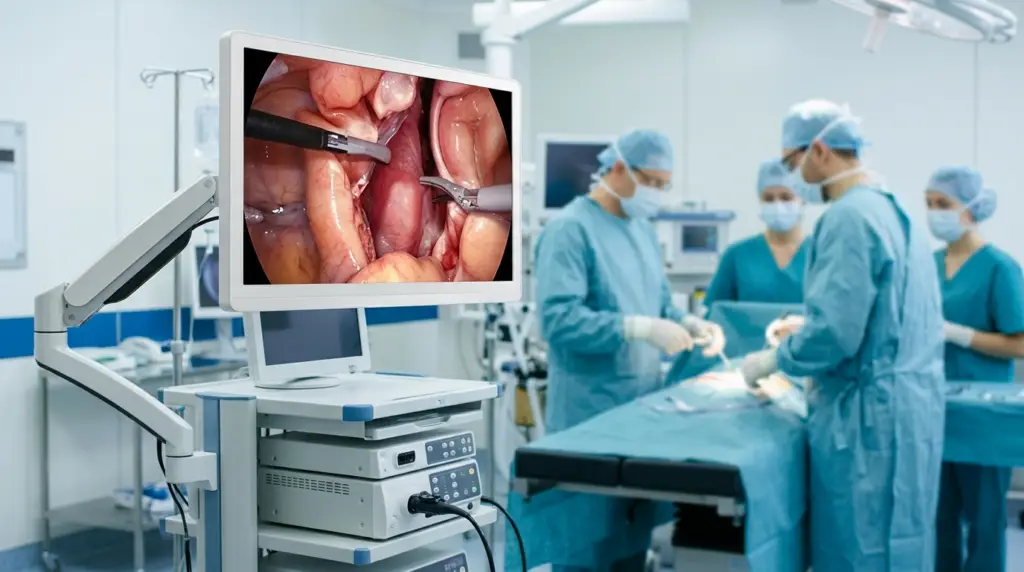
Surgical Display Solutions
Surgical Displays
Medical-grade surgical monitors built for demanding operating room workflows, delivering accurate color reproduction,
stable luminance, and support for multiple video sources.
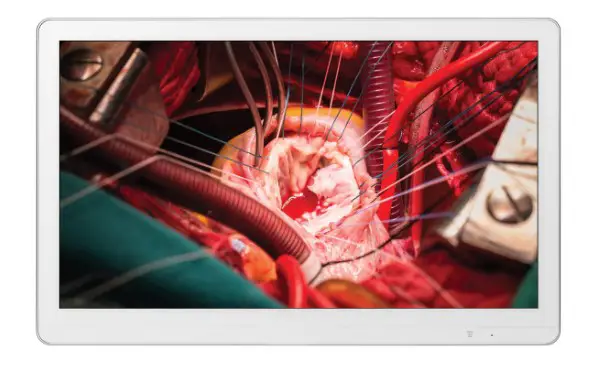
27" Full HD Surgical Display
Designed for inside the OR and optimized for surgery, this monitory displays live video feeds from surgical imaging systems
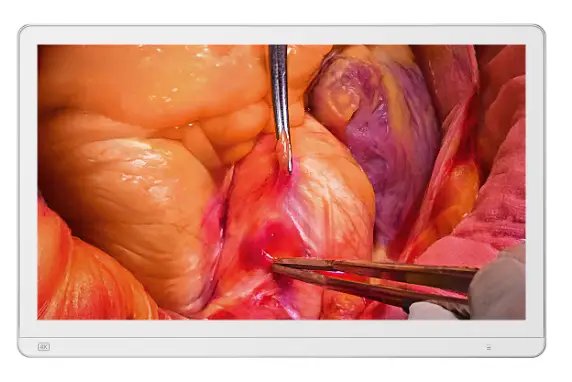
27" 4K Mini-LED Display
This 4K Mini-LED display is specifically designed for advanced surgical visualization in modern operating rooms
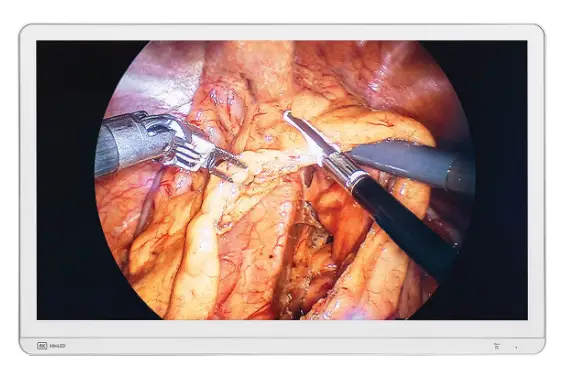
31.5" 4K Mini-LED Surgical Display
Designed for high-end surgical operating rooms and hybrid OR environments where clinicians need to view multiple live imaging sources with exceptional contrast, brightness, and color accuracy
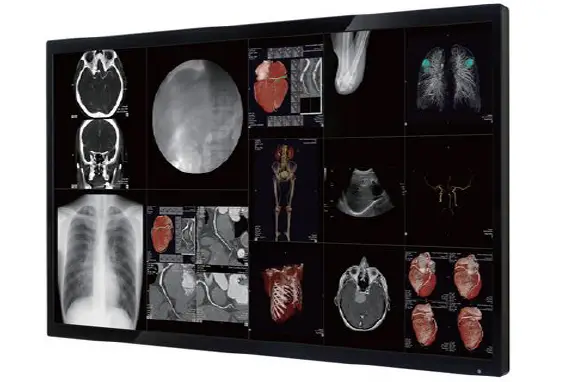
43" 4K Color Surgical / PACS-in-OR Display
Designed to enhance procedure guidance and in-room education during minimally invasive procedures
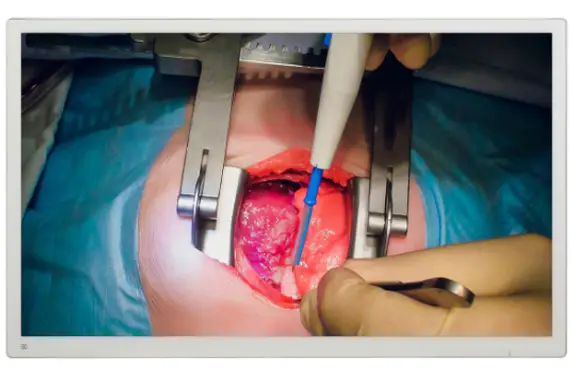
55" 4K IPS Surgical Display
Designed for large-format surgical visualization in operating rooms, hybrid ORs, and integrated surgical suites where multiple clinicians need to view the same surgical image simultaneously
Key Benefits of DBI Surgical Displays
Advanced Display Technology
DBI surgical displays render high-brightness, accurate color images so surgeons can identify fine anatomical structures and tissue boundaries with confidence.
Broad Connectivity and System Compatibility
DBI’s surgical product line supports a wide range of video inputs, including modern and legacy surgical equipment. This reduces the need for signal converters and helps hospitals integrate new displays into existing OR infrastructures.
Real-Time Signal Performance
Near-zero latency ensures on-screen images match instrument movement in real time, which is critical for coordination minimally invasive and robotic assisted procedures.
Unmatched Service, Support & Value
Industry-leading warranty programs, responsive support, and integration deliver solutions with exceptional long-term value.
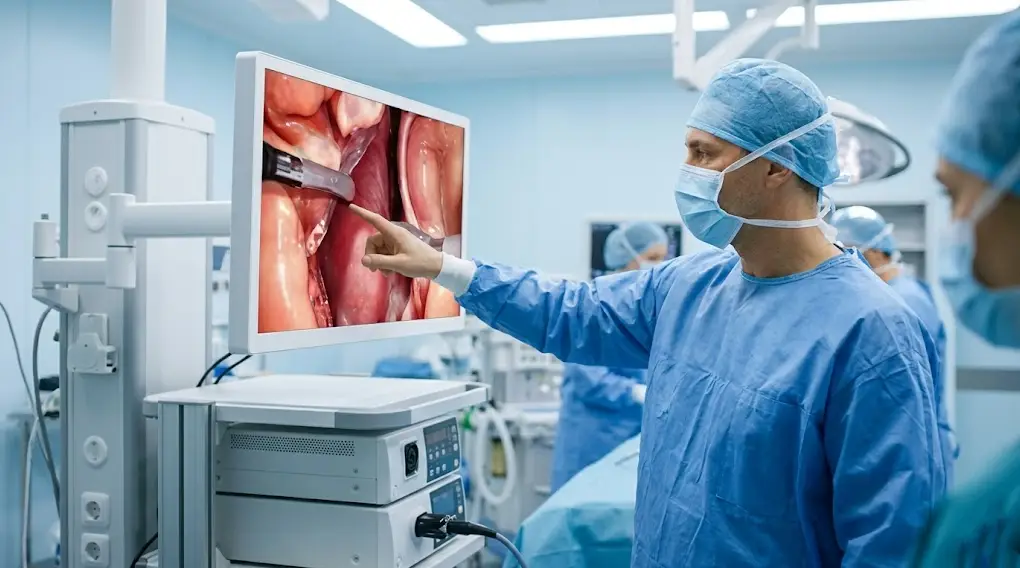
Designed for Every Surgical Environment
General Surgery OR/ER
Supports high-volume surgical workflows with consistent image accuracy and reliability.
Minimally Invasive & Laparoscopic Suites
Delivers the low-latency, high-contrast imaging that laparoscopic procedures require for precise instrument control.
Robotic Surgery Environments
Compatible with robotic surgical platforms requiring stable, high-resolution video output for accurate visualization.
Hybrid ORs & Interventional Radiology
Supports simultaneous display of fluoroscopy, PACS images, and live surgical video in integrated imaging environments.
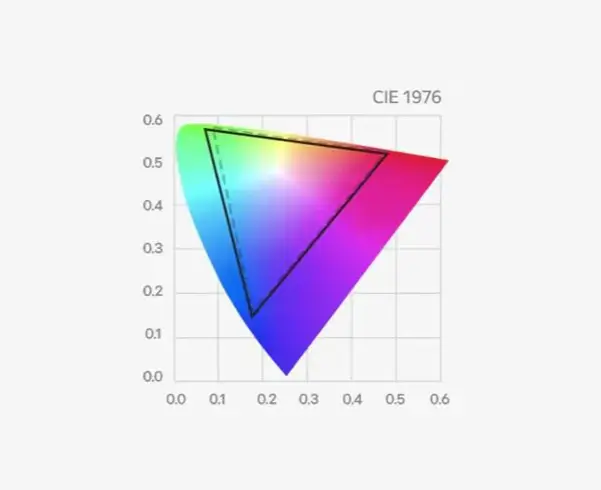
Surgical Displays Built for Visual Accuracy
Surgical workflows demand precision, consistency, and reliability. DBI surgical displays are engineered to deliver accurate grayscale tones compliant with DICOM Part 14. Stabilized brightness settings and a wider color spectrum, especially deep reds, enables surgeons to view color-accurate, high quality images.
Supported Surgical Imaging Workflows:
- Endoscopy (gastrointestinal, bronchoscopy, ENT)
- Laparoscopy and minimally invasive abdominal surgery
- Arthroscopy and orthopedic imaging
- Robotic-assisted surgery systems
- Urology and gynecology procedures
- Interventional radiology and hybrid OR imaging
- PACS reference viewing in the OR
- Patient vital signs and data overlay
Engineered for Surgical Performance

DICOM 3.14 Compliance
Ensures consistent grayscale rendering so radiologists can accurately detect subtle differences across imaging modalities.
High Bit-Depth
Supports enhanced contrast differentiation, enabling clearer visualization of fine anatomical structures.
Luminance Uniformity
Maintains brightness consistency across the screen, reducing visual fatigue and improving diagnostic confidence.
Long Term Stability
Engineered for continuous clinical use with long-term image stability and performance consistency.
Surgical Display FAQs
What resolution is recommended for a surgical display?
For most OR applications, Full HD (1920 x 1080) is the minimum acceptable resolution. 4K UHD (3840 x 2160) is strongly recommended for 4K endoscopy camera systems and robotic surgery platforms, as it provides four times the pixel density of Full HD. Higher resolution improves the surgeon's ability to distinguish fine tissue detail, vascular structures, and subtle color differences during minimally invasive procedures. interruption is clinically important.
What is the difference between a commercial monitor and a medical-grade surgical display?
Medical-grade surgical displays are purpose-built for clinical environments. They feature sealed, splash-proof housings for infection control, near-zero latency to support hand-eye coordination during live surgery, high-brightness panels that remain visible under OR lighting, and broad video input compatibility. Commercial monitors lack these design requirements and are not appropriate for primary surgical visualization.
Does latency matter in a surgical display?
Yes. Latency — the delay between camera capture and on-screen display — directly affects the surgeon's hand-eye coordination. For laparoscopic and robotic-assisted procedures, sub-16ms latency is the accepted standard. Higher latency creates a perceptible lag between instrument movement and on-screen response, which can compromise precision during critical maneuvers.
Can one surgical display be used for multiple imaging sources?
Yes. DBI surgical monitors support Picture-in-Picture (PiP) and Picture-by-Picture (PaP) configurations, allowing simultaneous display of multiple video sources — such as an endoscope feed, patient vitals, and PACS reference images — on a single screen. This eliminates the need for additional display hardware and reduces OR clutter.
What size surgical display is right for my OR?
Optimal display size depends on the surgical workflow and OR layout. Near-patient displays (26"–32") are typically mounted on boom arms directly in the surgeon's line of sight. Large-format displays (42"–58") are used for ceiling or wall-mount viewing by the full surgical team, for hybrid OR multi-source workflows, or to replace banks of smaller monitors. DBI offers both categories to fit any OR configuration.
How do I clean and disinfect a surgical monitor?
DBI surgical displays feature flat-front, sealed-surface designs that are compatible with hospital-grade disinfectants. Smooth, bezel-free surfaces eliminate crevices where contaminants can accumulate, enabling quick and thorough cleaning between procedures. Always consult the specific product's cleaning guidelines for approved cleaning agents and methods.
What video inputs do DBI surgical monitors support?
DBI surgical monitors support a wide range of video inputs, including HDMI, DisplayPort, SDI (3G and 12G), and DVI, depending on the model. This broad compatibility allows facilities to integrate DBI displays with both legacy camera systems and the latest 4K surgical video processors without signal conversion hardware.
Why would a hospital or radiology group consider DBI if they have traditionally used another display brand?
Many healthcare organizations evaluate DBI because they are looking for an alternative that delivers enterprise-grade diagnostic imaging performance, highly responsive USA-based support, flexible service programs, and one of the best overall values in diagnostic imaging. DBI combines FDA-cleared diagnostic displays, integrated DICOM calibration management through CFS Calibration Suite®, and complete enterprise imaging solutions designed specifically for radiology workflows.
Testimonials
Upgrade Your Operating Room
Speak with our imaging specialists to identify the ideal surgical display solution for your workflow and clinical environment.